
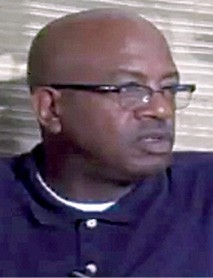
Sylvester Fulton
Recent Rhodes College graduate Elizabeth Saba was taught that
integration of public schools during the Civil Rights era was a
positive move toward better race relations.
And though most would agree that integration has made a huge
difference, Saba received a new perspective from 50-year-old Sylvester
Fulton, a native of the Hyde Park community in north Midtown.
“From his experience, integration broke up communities,” Saba says.
“His former school was closer to his community, and he was being bused
to another school. Parents couldn’t travel to PTA meetings, and there
was a major decline in community pride.” Saba collected Fulton’s oral
history earlier this month for Rhodes’ Crossroads to Freedom Digital
Archive program.
Saba and four other college students and recent graduates have spent
their summer recording interviews with residents of north Midtown about
life during Civil Rights era Memphis. The interviews as well as
photographs and documents from the 1950s and 1960s are available at
CrossroadsToFreedom.org.
“We look for people who have either gone through integration or
remember segregation, but not people, like our generation, who have
only read about it in the history books,” says Paris Westbrook, who
will begin her third year at Nashville’s Fisk University in the
fall.
“The project is really about bringing all this information together
so we can have conversations about the impact of the Civil Rights era
on Memphis today,” says Suzanne Bonefas, director of special projects
at Rhodes.
Crossroads to Freedom has been around since 2005, but this marks the
first year the project has focused on a single Memphis
neighborhood.
“In year’s past, we focused a lot on church leaders, former city
councilmen, and people who knew Dr. [Martin Luther] King,” says Daniel
Saba, who will enter college at American University in Washington,
D.C., in the fall. “This year, we’re focusing on the history of
communities, like Hyde Park.”
In order to build rapport with interview subjects, the five students
working in north Midtown have spent time at the Hollywood Community
Center.
“People in the Hollywood community don’t know us from the average
person on the street, so for us to come in and say, ‘Hey, we want your
story,’ makes people a little uncomfortable. Some people are very
reserved with their stories,” Westbrook says.
Once that trust is gained, the subjects talk about life in the Boss
Crump era or their experiences with segregation.
“I spoke to a woman who had grown up very sheltered from race
issues, but the first time it sunk in was when she went to the movies
to see King Kong,” Daniel Saba says. “She’d been waiting in line
for it and noticed everyone else in line was white. When she got to the
front of the line, they said she’d have to go to a different line and
sit at the top of the theater.”
By the end of the summer, the students will have interviewed 20
residents of north Midtown. Those interviews will be transcribed and
added to the other 9,000 documents on the Crossroads website.
Another Crossroads student team is working at the Memphis Public
Library to digitize a set of interviews that MIFA conducted in the
Evergreen neighborhood in the 1970s.
